

Copper data cabling
Low-voltage data cabling and drops for computers, phones, printers, and point-of-sale.
Structured Cabling · Data, fiber, and Audio & Video cabling · Clients nationwide
Data cabling, fiber, racks, and network rooms, plus the Audio & Video cabling for speakers, paging, and displays. Planned together, pulled and terminated by our own technicians, labeled at both ends, and tested before handoff.
Data cabling
The network is only as good as what it runs on. We plan the cable plant with the rest of the technology, so the Wi-Fi, phones, cameras, displays, and speakers each have a home.
What we install
Low-voltage data cabling and drops for computers, phones, printers, and point-of-sale.

Fiber between floors, buildings, and network rooms when copper will not reach.

Drops placed for access points, IP cameras, and phones, with PoE planned in.

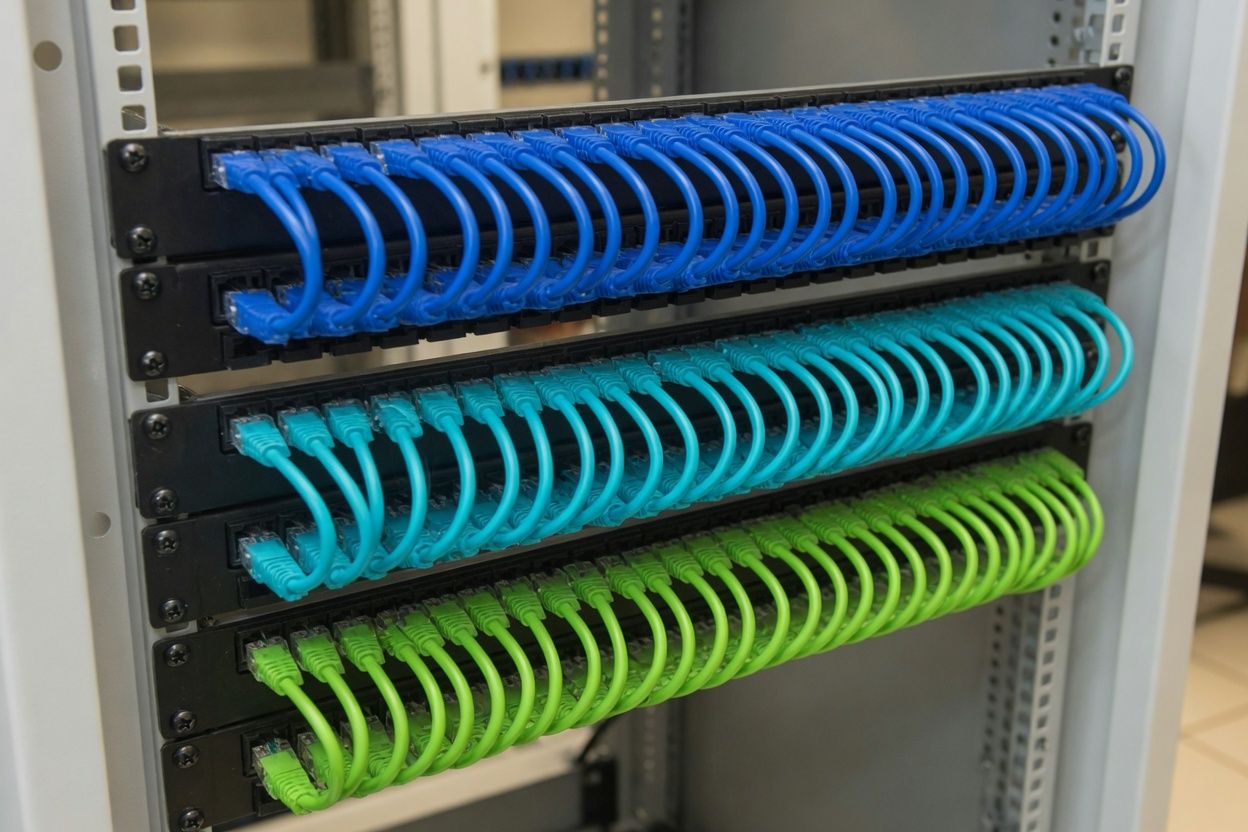
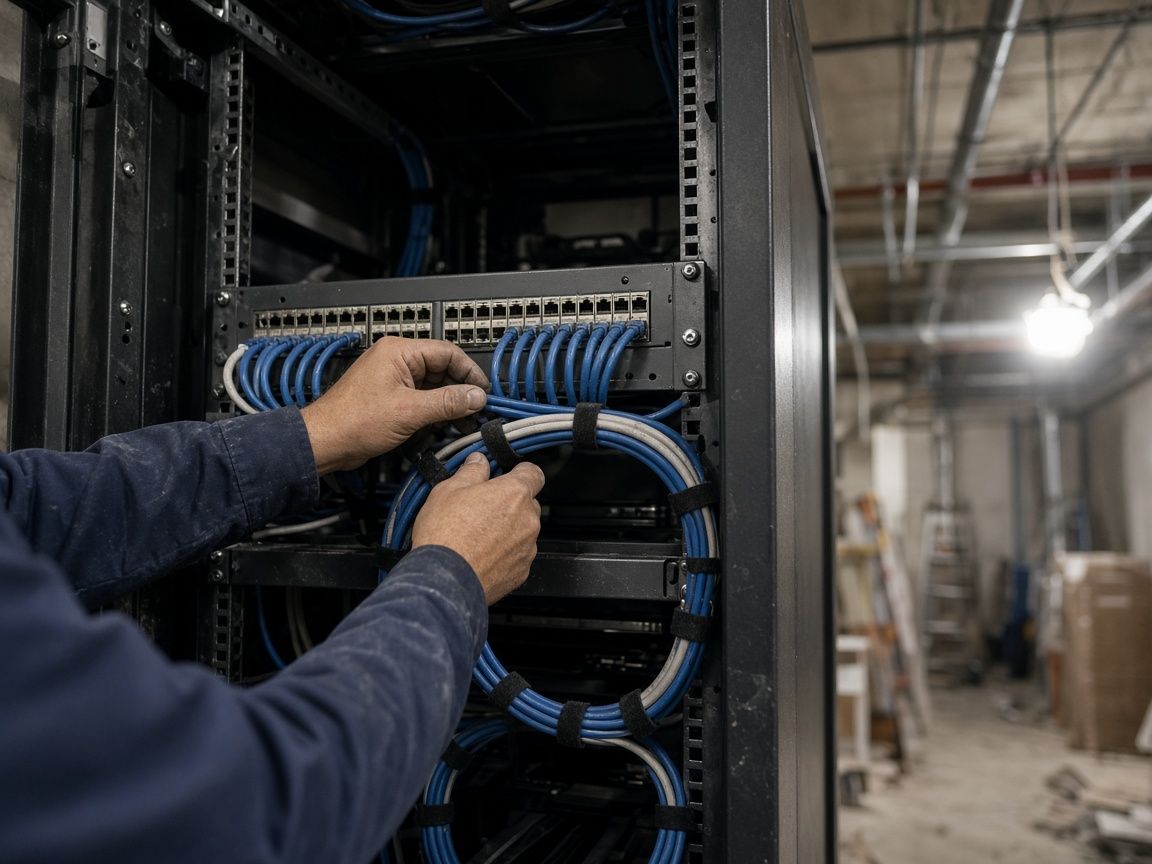
Rack buildouts, patch panels, and cable management in rooms that are easy to work in.

Work scheduled with the general contractor, so the cable is in before the ceilings close.

Every run labeled at both ends and tested, with the layout handed over and kept on file.
Audio & Video cabling
Speakers, paging, and screens need their own runs, and they work best when they are planned with the network instead of added after the walls are closed. Our technicians run the Audio & Video cabling on the same project and to the same standard as the data cabling, ready for the Audio & Video system and the VEXview screens that go on it.

Speaker wire and distributed 70V/100V audio lines, so many speakers can run from one amplifier across a whole floor.

Drops placed for even coverage, coordinated with the ceiling grid, lights, and sprinklers.

HDMI to nearby screens, and HDBaseT over Cat6 for longer runs to displays and digital signage.

Each screen location planned with its mounting height, its low-voltage drop, and the power it needs, coordinated with your electrician.

Runs for paging microphones, stations, and paging zones, tied into the sound system.
Speaker lines and inputs terminated at the rack where the amplifiers and signal processors live.
Speaker lines and display runs labeled at both ends and tested before the equipment goes in.
The speakers, amplifiers, processing, and screens that go on this cabling.
Audio & Video →VEXview signage →How a project runs

We review the plans or walk the site and learn what has to connect: computers, Wi-Fi, cameras, speakers, and screens.

Drops, speaker runs, display locations, and racks are written down, and the work is quoted before it starts.
Our technicians pull the cable on the construction schedule and terminate it at the wall, the ceiling, and the rack.
Every run is labeled at both ends and tested before the equipment goes in.

The space is checked before it opens, and the layout stays on file.

For multi-location brands, the same cabling layout rolls out site after site.
Who does the work
The people who pull the cable are part of the same team that supports the network, the sound system, and the screens afterward. When something needs attention later, the answer is not a stranger's guess at what is in the wall.
Pairs well with

Background music, paging, speakers, amplifiers, and DSP on the runs we pull.

Digital signage content for the screens at every location.

UniFi Protect cameras on PoE runs planned with the network.

The monthly plan behind the network once it is running.
New sites opened with IT, network, cameras, and Audio & Video in place.

Ongoing support for each location after it opens.
Questions
Structured cabling is the organized cable plant a building runs on: copper data cabling and fiber, the drops for computers, phones, Wi-Fi, cameras, and displays, and the racks, patch panels, and network rooms where it all comes together. We plan it, pull it, terminate it, label it, and test it.
Yes. Audio & Video cabling is part of the same project: speaker wire and distributed audio runs, ceiling speaker drops, display and signage runs over Cat6, low-voltage paging runs, and the rack where the amplifiers and processors are terminated.
It is the standard way to run many commercial speakers from one amplifier. Each speaker has a small transformer, so long runs and many speakers can share one line. It is common for background music and paging in stores, restaurants, offices, and clinics.
Yes. For longer distances we use HDBaseT, which sends HDMI video, audio, and control over a single Cat6 cable between a transmitter and a receiver behind the display. It keeps the run clean and avoids long HDMI cables in the wall.
Yes. We plan each display location with the mounting height, the low-voltage drop, and the power it needs, and we coordinate the outlet with your electrician or general contractor so it is in place before the screen goes up.
Yes. Every run is labeled at both ends, and we test the cabling before handoff. You get the layout on file, so the next person knows what is in the wall.
No. The cable is pulled and terminated by VEXitEY technicians, part of the same team that supports the network, the sound system, and the screens afterward.
Yes. On a buildout we work with the general contractor and schedule the cabling around the construction, so data, Audio & Video, and camera runs are in before the ceilings close.
Every space is different, so we walk the site or review the plans first, write down the drops, runs, and racks, and quote the work before it starts.
We work with clients across the United States. The Chicagoland area is our home base, and our technicians travel for multi-location and out-of-state projects.
Call (815) 749-0600 or send a message. A person will walk the space with you and quote the work before it starts.
Contact VEXitEY